

It is no doubt that the Tinubu-led administration has took the bull by the horn – with the removal of fuel subsidy, an action that has reset practically the modus operandi of the country.
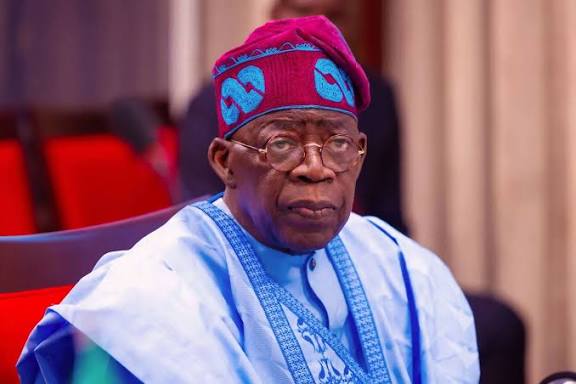
President Bola Ahmed Tinubu, in his 65th Independence Anniversary Speech on Wednesday, listed the gains of his administration. He went further to highlight some of the policies implemented, and justified the rationale behind them. Notably, the tax reform which is yet to take effect is one major issue that has sparked national debate over time.
The president, however, maintained that payment of taxes will translate into national growth and transformation.
While listing most of the achievements of the administration in the past two years and quarter, Tinubu said that state governors are getting more resources, a fact that can be verified with the distribution of the Federation Account Allocation Committee (FAAC). He further claimed that with local government autonomy in place, “the local government now have more resources to take care of people at the lower level of the ladder.”
But in practice, only a handful of states have demonstrated compliance by conducting local government elections and allowing direct distribution of funds. The rest still control the purse strings of local governments, despite a Supreme Court judgment affirming their financial autonomy. The presidency itself has kept largely silent since the apex court ruling, raising questions about enforcement of the law and whether the administration is overstating progress in this area.
Another major claim Tinubu made was the disbursement of ₦330 billion to eight million households under the social investment programme to support poor and vulnerable Nigerians. While the figure sounds impressive, the process remains opaque. Unlike the student loan scheme, where beneficiaries have publicly confirmed receipt of funds, there is little visible evidence of such widespread transfers to vulnerable households.
This raises pressing questions: How were beneficiaries identified? Through what channels were funds disbursed, considering many vulnerable Nigerians do not own mobile phones or bank accounts? Is there a verifiable list of recipients? Until government publishes detailed data or allows independent audits, the claim risks being dismissed as rhetoric rather than reality.
Similarly, Tinubu’s mention of Credicorp, an initiative said to have granted 153,000 Nigerians affordable loans worth ₦40 billion for vehicles, solar energy, home upgrades, and digital devices, raised eyebrows. The announcement came as a surprise because, until the anniversary broadcast, there had been little or no public awareness that such disbursements had actually taken place.
For transparency, government should make available the criteria for selecting beneficiaries, the names of disbursing institutions, repayment terms, and an anonymized but verifiable list of those who accessed the loans. Without such disclosures, Credicorp risks being perceived as another ambitious but unsubstantiated government promise.
The president also cited YouthCred, claiming tens of thousands of National Youth Service Corps (NYSC) members have benefitted from consumer credit facilities for resettlement. Again, there is little independent confirmation of this claim. Most corps members and youth groups are yet to attest to accessing such funds. The absence of credible documentation or testimonials from beneficiaries leaves the programme in doubt.
Beyond the social schemes, Tinubu also pointed to macroeconomic improvements, such as a reported 4.23% GDP growth in Q2 2025, a decline in inflation to 20.12% in August 2025, and a rise in foreign reserves to $42.03 billion, the highest since 2019. While these numbers are more readily verifiable through the National Bureau of Statistics (NBS) and Central Bank reports, critics argue that such aggregate figures do not reflect the harsh realities of rising food prices, unemployment, and poverty experienced daily by ordinary Nigerians.
In addition, the president highlighted that Nigeria has now achieved a trade surplus for five consecutive quarters, with non-oil exports accounting for nearly half of exports. While this indicates a positive trajectory, details of what constitutes these exports, and whether they represent sustainable growth beyond temporary commodity cycles, remain less clear.
Ultimately, Tinubu’s 65th Independence Anniversary address was heavy on optimism and impressive statistics. But it also left behind a trail of unverified claims, particularly around social investment programmes, loan schemes, and local government autonomy. For a nation struggling with transparency, accountability, and public trust, it is not enough for government to reel out big figures without backing them with verifiable data.
If indeed ₦330 billion has been disbursed to households, ₦40 billion to Credicorp loans, and thousands of corps members have received YouthCred benefits, then Nigerians deserve evidence beyond presidential speeches. Publishing beneficiary lists (with privacy safeguards), conducting independent audits, and providing periodic reports are crucial steps to prove that these interventions are real, widespread, and effective.
Until then, many of Tinubu’s Independence Day claims remain unverified — promises and proclamations waiting for proof.